10 Children’s Books Parents Are Choosing Over Screens
Discover the top children’s books over screens that parents are choosing in 2026 to encourage screen-free reading habits, creativity, focus, and meaningful engagement for young readers.on May 14, 2026
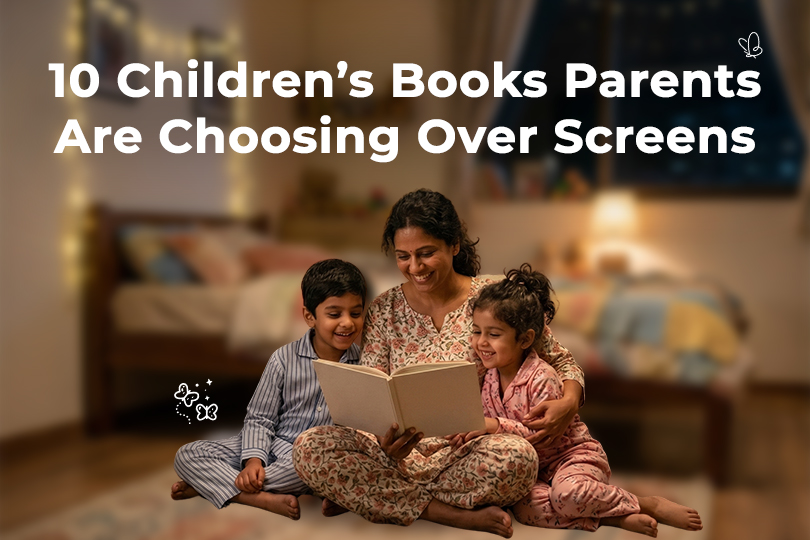
Children today are growing up in a world dominated by reels, gaming apps, YouTube autoplay, and algorithm-driven entertainment. According to recent global media reports, children between the ages of 8–12 spend nearly 5.5 hours daily on entertainment screens outside schoolwork, while teenagers spend even more. At the same time, educators are reporting declining attention spans and reduced reading stamina among young learners.
But there is another trend emerging quietly inside homes, libraries, and schools: parents are actively investing in children’s books over screens.
The modern children’s bestseller is no longer slow or overly instructional. Today’s successful books are emotionally intelligent, visually imaginative, fast-paced, funny, and deeply interactive in the way they engage young readers. These shifts also reflect evolving children’s reading trends across schools, libraries, and homes.
Here are 10 children’s books parents are increasingly choosing for meaningful, screen-free engagement along with the age groups they resonate with and why children are connecting with them.
Why Parents Are Returning to Books
A 2025 literacy survey by global education researchers found that:
- Children who read for pleasure at least 20 minutes daily showed stronger vocabulary development and emotional comprehension.
- Mystery, fantasy, and humour-driven books had the highest completion rates among reluctant readers.
- Parents are increasingly seeking “active entertainment” that develops imagination instead of passive screen consumption.
Publishers are responding by creating books that:
- have shorter, dynamic chapters,
- emotionally relatable protagonists,
- high-concept storytelling,
- and real-world themes children care about.
These changes are shaping modern screen-free reading habits and redefining what successful modern children’s books look like today.
That explains why the following titles are gaining attention among families.
1. The Girl Who Wouldn't Stay Within the Lines by Vinitha
Best Age Group:
6–9 years
Why It’s Connecting With Readers
This story resonates strongly with early readers because it celebrates creativity, self-expression, and confidence at an age when children are still developing identity and independent thinking.
Teachers and parents increasingly favour books that encourage “creative risk-taking” rather than perfectionism — especially after studies linked excessive screen exposure with reduced imaginative play.
Popularity Indicator
Books focused on creativity and emotional confidence have become especially popular in primary school reading programs because educators now prioritise social-emotional learning alongside literacy development.
Why It Works Better Than Screens
Instead of rapid visual stimulation, the book encourages children to imagine possibilities and interpret emotions actively something passive video consumption rarely requires.
2. Zara and the Bumbling Genie by Padmini Sankar
Best Age Group:
7–11 years
Why Children Love It
Fast pacing, humour, magical mishaps, and cliffhanger-style storytelling make this especially attractive to children who are used to quick digital entertainment.
Fantasy-comedy titles currently dominate middle-grade circulation lists globally because they sustain engagement without feeling “educational.”
Popularity Indicator
Humorous fantasy consistently ranks among the most borrowed genres in school libraries for readers aged 8–11 because children are more likely to finish books that make them laugh.
Interesting Fact
Publishing analysts have observed that humorous chapter books often become “gateway books” that help reluctant readers build longer reading habits among books for young readers.
3. Kora and the Bird Whisperer by Sara Şahinkanat
Best Age Group:
8 -12 years
Why Parents Are Choosing It
Nature-centred fiction has seen rising popularity because families increasingly want children to reconnect with the outdoors after years of screen-heavy lifestyles.
This story encourages observation, empathy, patience, and curiosity qualities often associated with mindfulness-based learning.
Popularity Indicator
Environmental and wildlife fiction has shown steady growth in children’s publishing sales as climate awareness becomes a larger part of school discussions worldwide.
Interesting Fact
Studies suggest children who engage with nature storytelling are more likely to demonstrate empathy toward animals and environmental responsibility.
4. The Fearless Schoolboy by Delshad Karanjia
Best Age Group:
9–13 years
Why It Resonates
Pre-teens increasingly connect with stories about resilience, anxiety, confidence, and identity because these reflect real pressures children experience in school and social settings.
Books about emotional resilience are growing rapidly in classrooms because educators believe narrative storytelling helps children process fear more effectively than lectures.
Popularity Indicator
Coming-of-age stories continue to perform strongly among middle-grade readers because children prefer emotionally relatable protagonists over “perfect heroes.”
Interesting Fact
School librarians often recommend resilience-focused fiction to children transitioning into middle school environments.
5. Agassi and the Great Cycle Race by Khyrunnisa A.
Best Age Group:
7–10 years
Why It Stands Out
Adventure stories involving outdoor activity are increasingly popular among parents trying to encourage movement and reduce sedentary screen habits.
The cycling adventure format keeps energy levels high while subtly promoting teamwork, determination, and physical activity.
Popularity Indicator
Sports and outdoor-themed fiction performs especially well during summer reading programs because parents associate these books with healthy lifestyle habits.
Interesting Fact
Adventure fiction is one of the highest-completion genres among children transitioning from picture books to independent reading.
6. The Mystery of Many Many Missing Things by Hemangini Dutt Majumder
Best Age Group:
8–12 years
Why Children Keep Turning Pages
Mystery remains one of the strongest genres for maintaining sustained attention because children naturally want to solve the puzzle before the ending.
Unlike scrolling content, mystery fiction rewards patience and focus.
Popularity Indicator
Mystery books consistently rank among the top-performing middle-grade genres in school reading surveys because they encourage independent reading momentum.
Interesting Fact
Educational psychologists often recommend mystery fiction because it strengthens inference-building and analytical thinking skills.
7. The Carrot Soup by Sadaf Hussain
Best Age Group:
3–6 years
Why Families Love It
Gentle storytelling and warmth make this ideal for bedtime reading and parent-child bonding sessions.
Read-aloud books remain crucial for early childhood literacy because they help children connect language with emotional comfort.
Popularity Indicator
Picture books focused on family warmth and food traditions continue to perform strongly among preschool audiences because of their emotional familiarity.
Interesting Fact
Research consistently shows that children who are read aloud to regularly develop stronger early vocabulary and listening comprehension.
8. My First Guide to AI by Om Books International
Best Age Group:
9 -14 years
Why It’s Timely
Children are surrounded by AI tools, voice assistants, recommendation algorithms, and chatbots, but very few understand how these technologies actually work.
This book helps children move from passive users of technology to informed thinkers about technology.
Popularity Indicator
AI-themed educational books for children have grown rapidly since schools began integrating discussions around artificial intelligence into learning environments, becoming a major part of children’s book trends 2026.
Interesting Fact
Publishers are increasingly creating “technology literacy” books because parents want children to understand digital systems rather than simply consume digital content.
9. Feelings Decoder! by Naumita Rishi
Best Age Group:
5 - 9 years
Why Parents Appreciate It
Emotional literacy has become one of the biggest priorities in modern parenting and education.
Books that help children identify and express emotions are increasingly recommended by counsellors, educators, and child psychologists.
Popularity Indicator
Social-emotional learning (SEL) publishing has become one of the fastest-growing categories in children’s nonfiction and educational fiction.
Interesting Fact
Children who develop emotional vocabulary early are often better at conflict resolution and communication later in life.
10. Wonder Tales For A Warming Planet by Rajat Chaudhuri
Best Age Group:
10 -14 years
Why It Matters
Young readers today are highly aware of environmental issues, but many climate conversations can feel overwhelming.
This anthology uses imaginative storytelling to introduce environmental responsibility in a hopeful and accessible way.
Popularity Indicator
“Cli-fi” (climate fiction) for younger readers has become one of the fastest-growing thematic categories in global publishing.
Interesting Fact
Publishers increasingly report strong interest in environmentally themed books from both schools and parents looking for constructive climate conversations.
What Makes These Books More Effective Than Screens?
These books succeed because they deliver many of the things children seek from digital entertainment:
- excitement,
- fast pacing,
- emotional intensity,
- humour,
- interactivity,
- and imaginative immersion.
But unlike algorithm-driven platforms, books demand active participation from readers. Children imagine scenes, interpret emotions, predict outcomes, and build attention spans while reading.
That cognitive engagement is exactly why many parents are intentionally rebuilding reading habits at home and choosing books for digital generation readers who are growing up surrounded by screens.
Final Thoughts
The goal for many parents in 2026 is no longer simply reducing screen time. It is replacing passive consumption with meaningful engagement.
These books are succeeding because they understand modern young readers. They entertain first while also building empathy, curiosity, confidence, emotional intelligence, and critical thinking.
As modern children’s books continue evolving, families are increasingly embracing stronger screen-free reading habits that balance entertainment with learning.
And in an age of endless scrolling, that may be more valuable than ever.
FAQs
What age group benefits most from screen-free reading?
Children across all age groups benefit from reading, but early and middle-grade readers (ages 5–12) show especially strong developmental gains in vocabulary, empathy, and attention span through regular reading habits.
Why are mystery and fantasy books so popular with children?
Mystery and fantasy books naturally create curiosity, suspense, and emotional investment, which helps children stay engaged longer than many educational or instructional formats.
Are emotional learning books becoming more popular?
Yes. Social-emotional learning (SEL) books are one of the fastest-growing categories in children’s publishing because parents and schools increasingly prioritise emotional wellbeing.
What is climate fiction for children?
Climate fiction, often called “cli-fi,” introduces environmental themes through storytelling, helping children understand climate issues in imaginative and age-appropriate ways.
Can educational books about AI help children?
Yes. Books explaining AI and technology help children become informed digital thinkers rather than passive technology consumers.
Frontlist Media
Blog
children’s books over screens
screen-free reading habits
children’s book trends 2026
modern children’s books
Post a comment
0 comments

Trending Posts
.jpg)
.jpg)


.jpeg)
.jpg)

Recent Post
.jpg)
.jpg)



Related Post

.jpg)
.jpg)
.jpg)

 (1).jpg)
.jpg)

© 2026 - Frontlist - News and Updates of Publishing Industry, Book Reviews, Education News, Author Interviews, and Videos.. All Rights Reserved.
Sorry! No comment found for this post.